comparison
Should I run beginner classes myself or pay a teacher a cut of every seat sold?
Owner taught, flat fee teacher and revenue share each change your break even seat count and your labor law exposure. A side by side on cost, control and classroom capacity.
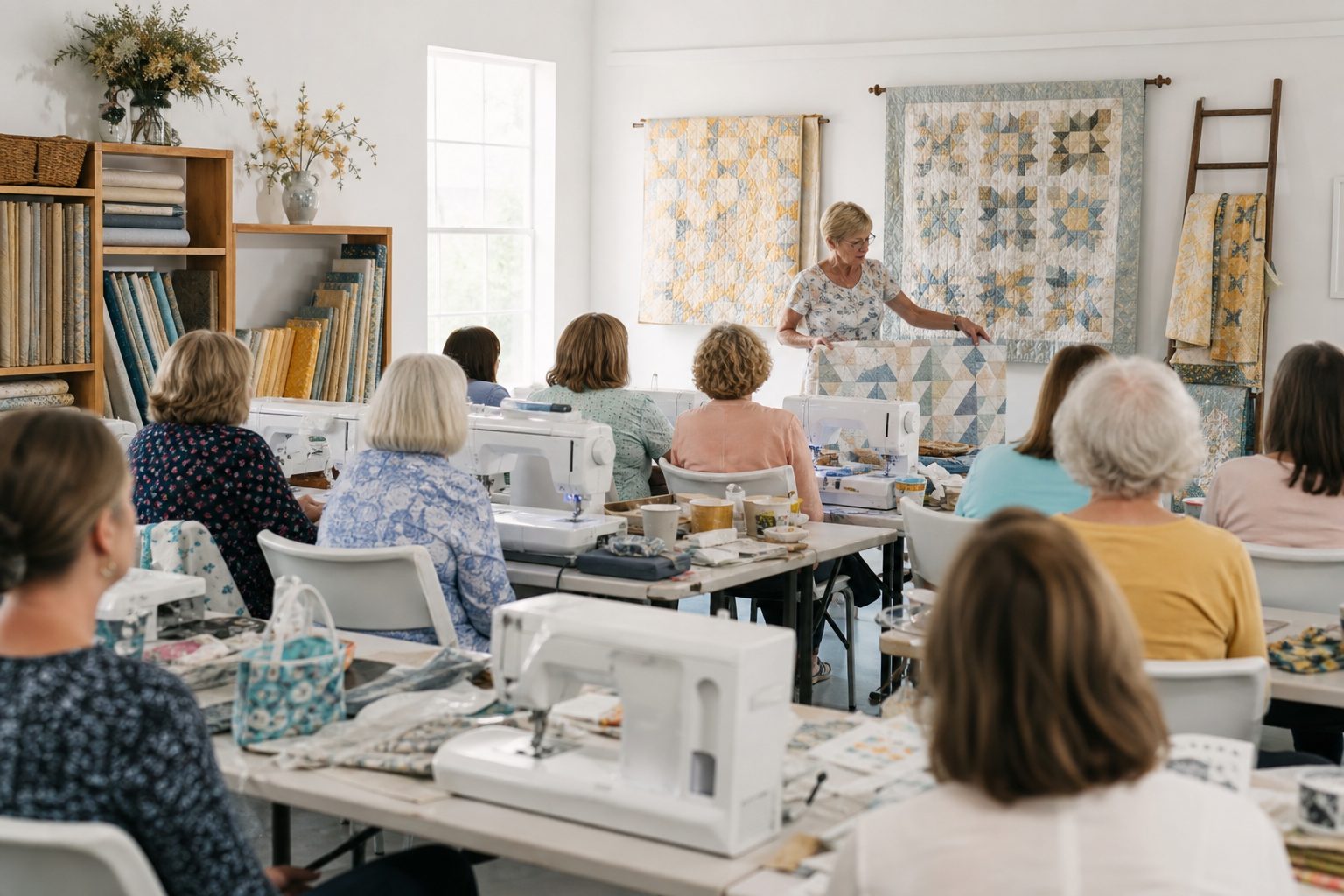
Teach the beginner classes yourself only if your hour at the front of the room is worth more than your hour on the sales floor, and if you can commit to the whole session without rescheduling. For most shops that is true for the first year and false after that. Once the calendar has more than about four classes a month, a paid teacher on a defined structure almost always produces more gross margin than an owner who keeps getting pulled out of the classroom to answer the phone.
The three structures worth considering are a flat fee per session, a per seat revenue share, and a hybrid with a floor. They differ in one thing that matters more than the rate: who absorbs the loss when only two students show up. Choose the structure by who can survive a thin class, not by which number looks smaller on paper.
There is a second question underneath the money one. A teacher on your schedule every Tuesday, using your machines and your curriculum, starts to look like an employee to a state labor agency no matter what the contract says.
The three common pay structures and how each scales with enrollment
Flat fee per session. You pay a fixed amount, say $120 for a three hour class, regardless of whether four or ten students sit down. Your cost per seat falls as the class fills. At four students that is $30 a seat. At ten it is $12. All the upside of a full class is yours, and all the downside of a thin one is yours too.
Per seat revenue share. The teacher takes a percentage of tuition collected, commonly somewhere between 50 and 70 percent depending on whether she brings her own students. Your cost per seat is constant. A thin class costs you almost nothing and a full class hands most of the gain to the teacher. This is the structure that keeps a good teacher marketing the class on her own social accounts, because her paycheck moves with enrollment.
Hybrid with a floor. A guaranteed minimum, say $75, plus a per seat amount above a threshold. This is what most shops land on after a season of both. The teacher will not drive across town for two students and no pay, and you are not writing a full check for a class that barely covered the room lights.
Owner taught. Cash cost is zero and true cost is your hourly value elsewhere plus whatever coverage you pay the floor staff who is now alone with a cutting line.
Keep reading: How do I build a class kit that actually turns a profit instead of eating my scraps?
Break even seats under each structure for a three hour class
Set the assumptions in the open so you can swap your own numbers in. These are assumptions, not survey data.
- Tuition: $65 per student, kit sold separately
- Room capacity: 10 seats
- Occupancy cost of the classroom for three hours: $35 (a share of rent, power, and machine wear)
- Floor coverage while the class runs: $60 (four hours of staff at $15 including the setup and teardown)
- Owner sales floor value: $45 an hour, meaning three hours of teaching plus one hour of prep costs you $180 of forgone attention
| Structure | Teacher cost | Fixed cost | Break even seats |
|---|---|---|---|
| Flat fee $120 | $120 fixed | $95 | 4 seats ($215 / $65 = 3.3, round up) |
| Revenue share 60/40 | $39 per seat | $95 | 4 seats ($26 margin per seat, $95 / $26 = 3.6) |
| Hybrid $75 floor plus $15 per seat over 4 | $75 plus $15 per seat above 4 | $95 | 3 seats ($170 / $65 = 2.6) |
| Owner taught | $180 opportunity | $95 | 5 seats ($275 / $65 = 4.2) |
Now run the same table at a full room of 10. Flat fee nets you $650 minus $215, which is $435. Revenue share nets $650 minus $390 minus $95, which is $165. Hybrid nets $650 minus $75 minus $90 minus $95, which is $390. Owner taught nets $375 after your own opportunity cost.
Read those two columns together and the rule falls out. If you can reliably fill past six seats, flat fee wins by a wide margin. If enrollment is unpredictable or the teacher is the draw, revenue share protects you on the downside and costs you the ceiling. The hybrid is the sensible default when you do not yet know which world you are in.
The number most shops forget
Tuition is rarely the point. If your average attendee spends $70 at the counter on class day, eight students add $560 in retail. That figure belongs next to the break even table when you decide how hard to bargain on the rate.
Contractor versus employee status for a recurring teacher
Federal wage and hour law and most state tests look at the same substance: how much control the shop exercises, whether the worker has an independent business, and how permanent the arrangement is. A guest teacher who brings her own pattern, sets her own dates, teaches at three shops, and invoices you afterward looks like a contractor. A teacher on your schedule every week, teaching a curriculum you wrote, on machines you own, with a rate you set, looks like an employee.
Several states apply a stricter test than the federal one, and California's version is hard for a recurring in shop teacher to satisfy. If your teacher is on the calendar most weeks, the safest answer is usually payroll: a part time hourly employee paid for teaching hours plus setup. Employer payroll tax adds roughly 8 percent to the wage, plus workers compensation. Compare that to a reclassification assessment with back taxes and penalties.
If you keep contractors, the practical hygiene is: a written agreement for each session series, an invoice from the teacher, no set hourly wage language, a 1099-NEC when annual payments reach $600, and no requirement that she teach exclusively for you.
Keep reading: What do I owe a customer when a class is canceled or she drops out the night before?
Who owns the pattern and who supplies the samples
Ask before the first class, in writing. Three separate things need an owner.
The pattern. If the teacher wrote it, she holds the copyright and you are licensing the right to teach it. Agree on whether that license survives her leaving. If the pattern is a commercial one from a designer, check its terms: many designers permit shop teaching and require one purchased copy per student, and a few require a teaching license.
The written curriculum. Handouts, cutting charts, and the class outline are separate from the pattern. If you want to run the class after the teacher moves on, the agreement has to say that the handouts are work made for hire or licensed to the shop.
The sample. Whoever paid for the fabric owns the quilt. Shops usually supply it from stock so the sample can hang in the window and drive registration. Write that down: it is the most common thing argued over when a teacher leaves.
What happens to pay when a class runs with two students
Decide the minimum before you publish the schedule, and publish it. A common structure: a stated minimum of four students, with a decision made 72 hours before the first session. Under the minimum you either cancel and refund, or run it and pay a reduced rate that both sides agreed to in advance.
Under flat fee, the whole loss is yours, so a low minimum is expensive. Under revenue share, a class of two pays the teacher $78 and she may well decline to drive in. That is exactly why the floor exists in the hybrid. A written line such as "if fewer than four students register, the shop may cancel or may run the class at the guaranteed floor only, at the teacher's option" resolves the entire conversation before it becomes an argument at 8pm on a Monday.
See how QuiltCounter handles this for quilt shops and fabric retail
Machine rental, room turnover and the hidden hours
The three hour class is not three hours of cost. A realistic accounting for a beginner class in a shop that rents machines looks like this.
- Setup: pulling and threading eight machines, checking bobbins, laying out irons and mats. 45 minutes.
- Teardown and reset for retail: 30 minutes.
- Machine maintenance amortized: if a rental machine costs $600 and needs a $90 service every 200 classroom hours, that is roughly $0.45 per machine hour, so about $11 for eight machines over three hours.
- Consumables: thread, needles, spare rotary blades, printed handouts. Call it $2 per student.
- Registration admin: 20 minutes across confirmations, a reminder, and one drop.
That is roughly 95 minutes of labor beyond the class itself. At $15 an hour that is $24, and it is why the $60 floor coverage figure in the break even table is not padding. If you charge a separate $12 machine rental to students who do not bring their own, you cover the maintenance and consumables and take the argument off the table.
Choosing a structure by class type and season
Use this as a starting rule and adjust once you have three months of actual enrollment.
| Class type | Best structure | Why |
|---|---|---|
| Beginner piecing, evergreen, always fills | Flat fee | Predictable enrollment means you keep the upside |
| Visiting or specialty teacher with a following | Revenue share | Her name fills the room, her pay should follow it |
| New class with no track record | Hybrid with a floor | Neither side gambles alone on an untested topic |
| Free or low cost machine demo tied to a sale | Owner taught | The class is marketing, the margin is in the machine |
| Holiday season sampler with heavy kit attach | Flat fee | Merchandise carries it, cap the teaching cost |
Seasonality matters too. January and September fill beginner classes. July does not. Running revenue share in the slow months and flat fee in the strong ones is fair, as long as the structure is set before registration opens rather than after you see the roster.
Where to start this week
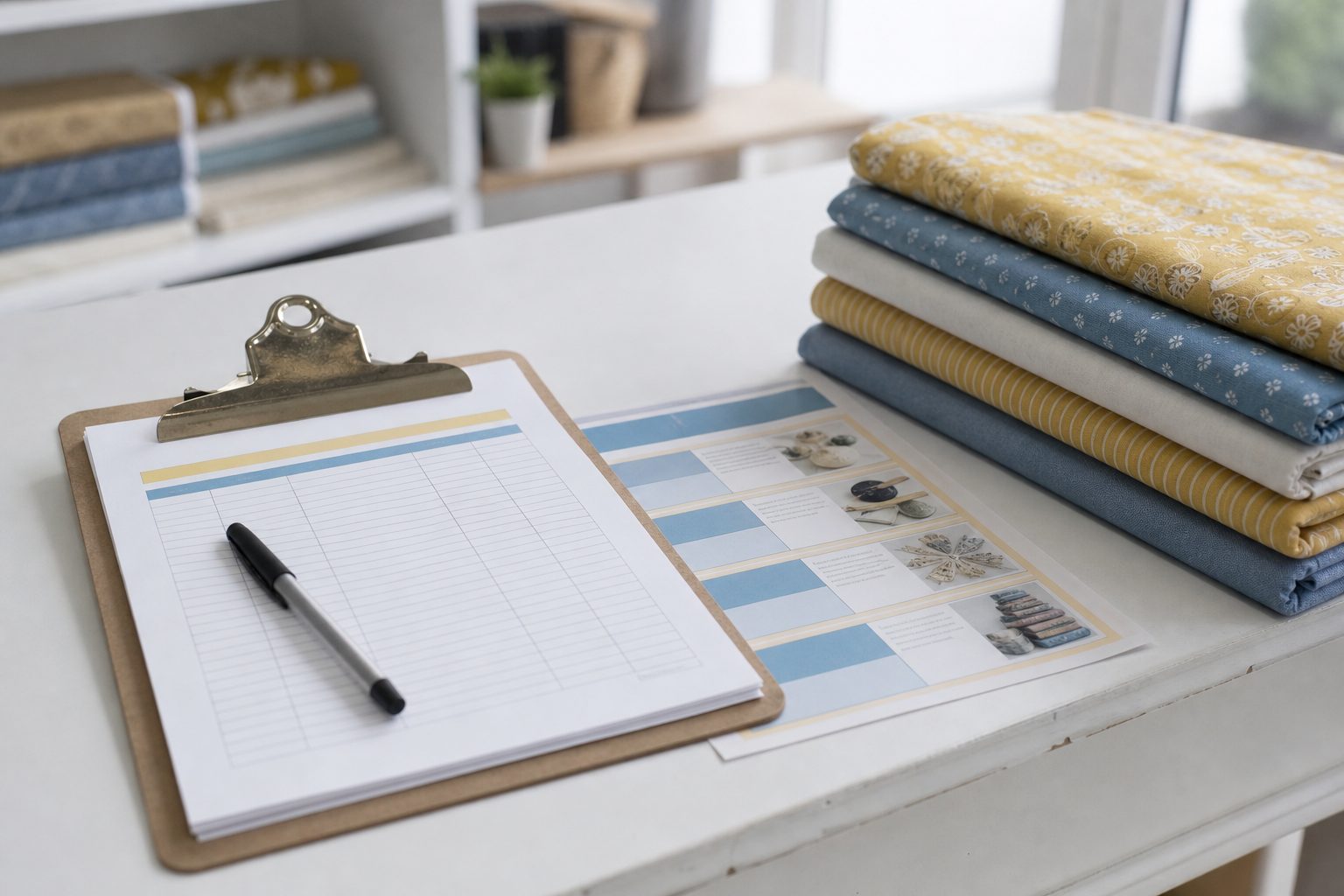
Pull your last six classes and write down four columns: enrollment, tuition collected, teacher pay, and merchandise rung up by attendees on class day. If those columns are hard to produce, the pay structure is not your bottleneck. Visibility is.
QuiltCounter tracks class registration seat by seat next to the bolt inventory the class draws from, so you can see which sessions still have three seats open, what each roster costs to run, and which fabric the kits are eating before you commit to another teacher contract. Set up your next season's calendar in it and let the first month of real numbers pick the structure for you.