Inventory and classes for quilt shops

Every bolt counted in yards, every class seat accounted for

QuiltCounter keeps the yardage on your shelves honest while it fills your class calendar, cuts your kits and tells you which best seller is about to run dry. It was built with shop owners at the cutting counter, not in a conference room.

318 US quilt shops cutting on it every week
1.9M yards recorded across the network last year
6 days average from first import to live counter
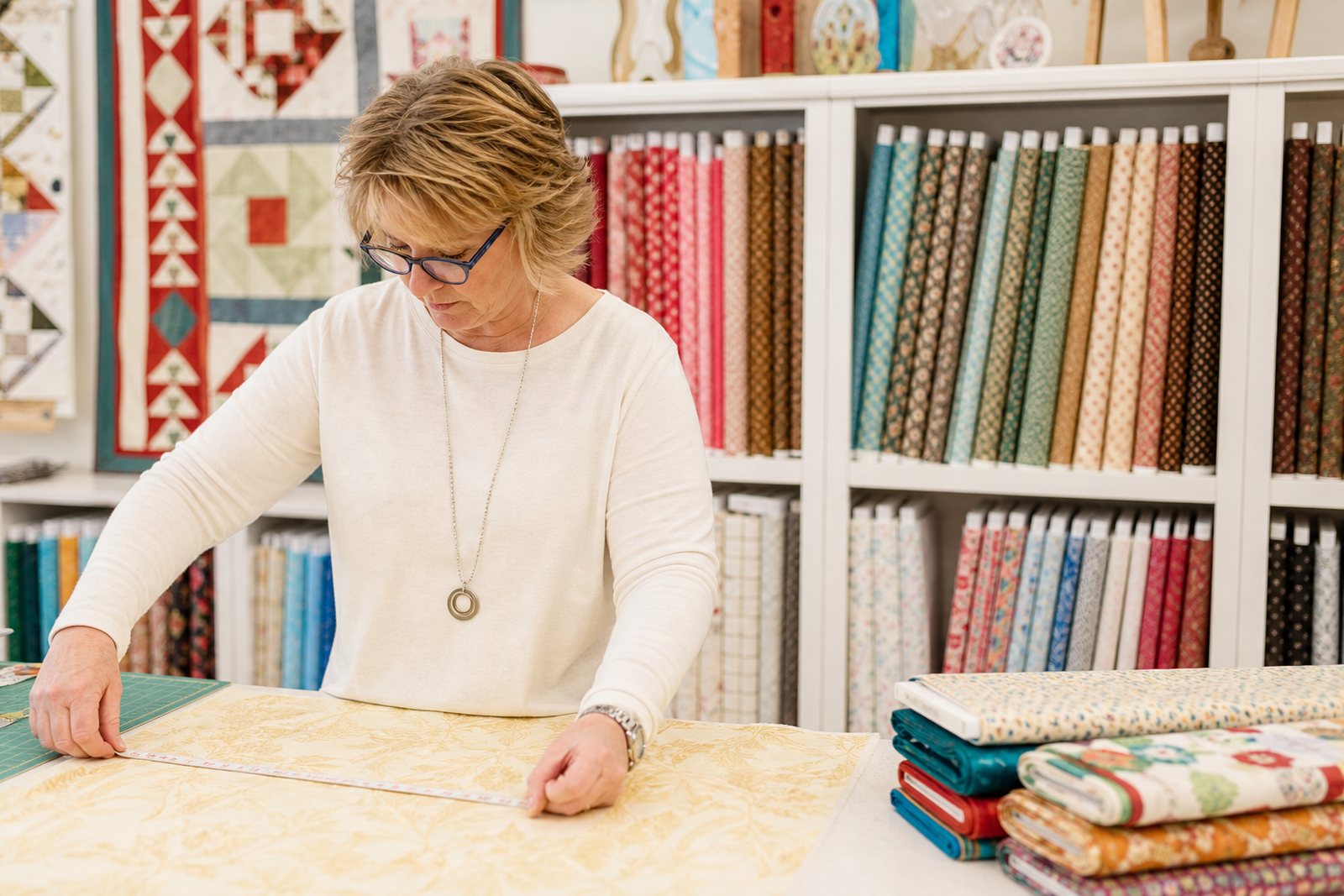
Quilt shop owner measuring a length of cotton at the cutting counter with shelves of colorful bolts behind her
Bolt 4471, Kaffe Spot BlueShe cut 2.75 yards. The shelf count dropped to 6.4 and the reorder flag lifted.

What the shelf actually costs you

You know the fabric. The paperwork is what eats the week.

Nobody opens a quilt shop because they love reconciling bolt counts on a Sunday night. These four are the ones shop owners raise first when we sit behind their counter for a day.


The bolt that was empty all along

A customer asks for three yards of the blue you promised her, and the bolt on the shelf has eleven inches left. She drives home to another shop, and she buys her backing there too.

A lost backing sale runs $38 to $70, and she may not come back this season.
Classes tracked on a clipboard

The Tuesday sampler has ten chairs. The sign up sheet says nine names, one of whom paid in March and cancelled by text. Nobody is sure whether the tenth seat can be sold.

One unsold seat in a $185 six week class is $185 you already paid the teacher for.

Kits cut twice, or not at all

Twenty kits were promised for the retreat. Someone cut fourteen, someone else cut eight, and the yardage came off a bolt that was also spoken for by the block of the month.

Six duplicate kits at 4.5 yards each is roughly $270 of cotton sitting in a bin.

The reorder you remembered too late

A pattern goes viral in a Facebook group, the coordinating print sells out in nine days, and by the time you call your rep the line has moved on to the next collection.

Owners tell us a missed restock on a hot line costs $900 to $1,600 in a quarter.

How the counter stays honest

Four steps from your first bolt count to a calendar that sells itself


  1. Import the wall

    Send us a spreadsheet, a point of sale export or a photo of your bolt tags. We match SKUs to manufacturer, collection, designer and fiber, then hand you a printable count sheet organized the way your shelves are organized, not alphabetically.

  2. Count once, on a phone

    Two people walk the shop scanning bolt tags and typing the yardage on the end. Nothing is installed. The count runs in a browser and saves as you go, so an interrupted Saturday count picks up exactly where it stopped.

  3. Cut, and let the shelf write itself down

    Every cut ticket at the counter takes the yardage off the bolt. Fat quarters, half yard bundles and remnant bin moves all come off the same record, so the number on screen matches the number on the cardboard.

  4. Sell seats and kits from the same yardage

    When you schedule a class, QuiltCounter reserves the fabric its kit needs and shows the remaining seats on your public sign up page. Reorder alerts fire against your own floor, not a generic threshold.

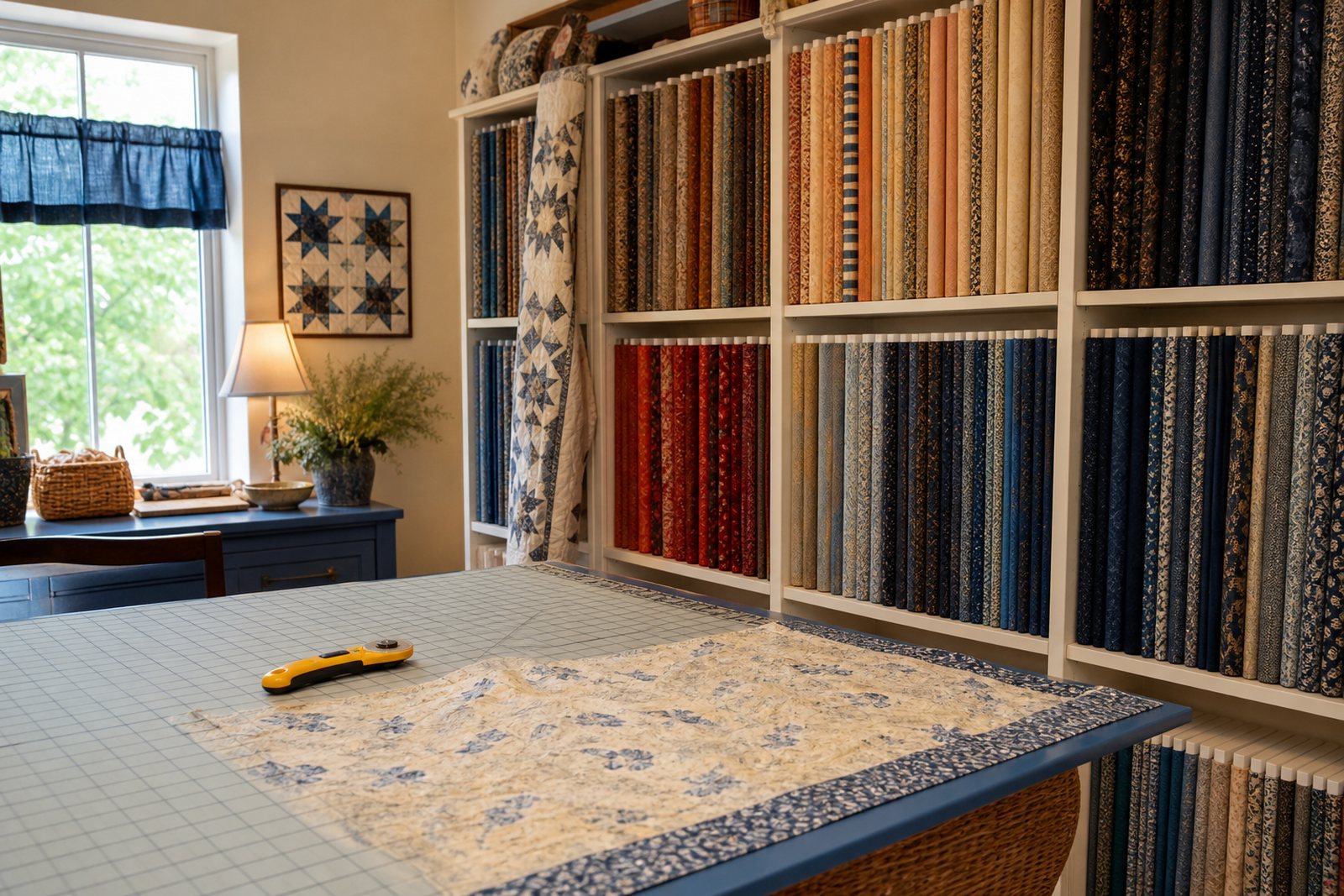
Quilt shop interior with shelves of folded fabric bolts, a wide cutting table and a rotary cutter in daylight
The count sheet follows your shelf order, so the person walking the wall never has to hunt for the next bolt.

What is in the software

Six things a quilt shop actually needs, built properly

No modules you will never open. Each of these came out of a request from a shop that was already paying us.


Yardage down to the eighth

Bolts carry live yardage in eighths of a yard, with a cut history you can scroll back through. Split a bolt, merge two ends or send a remnant to the bin and the math follows it.

Class rosters with real seats

Set the chair count for each session and QuiltCounter holds a seat while a student is paying, waitlists the overflow and emails the class when the teacher changes a supply list. Deposits and balances are tracked per student.

Kit assembly that reserves fabric

Build a kit from a pattern's cutting list and the system holds the yardage on each bolt the moment you approve the run. Print pull sheets and bag labels with the quantities already totaled.

Reorder alerts set to your floor

Each bolt gets its own reorder point based on how fast that print actually moves in your shop, not a store wide rule. Alerts arrive as one morning digest with a draft purchase order per vendor.

Block of the month, handled

Enroll members once, then release each month's fabric and pattern on schedule with the card on file charged the same day. Skipped months, gift memberships and mailed shipments all sit in one list.

Numbers you can act on Monday

See sell through by collection, yards cut per staff hour and which teacher fills a room fastest. Every figure opens into the underlying tickets so you can check the story behind it.

It fits the shop you already run

Working alongside your register, your rep and your books

QuiltCounter is the yardage and calendar layer. The tools you already trust keep doing their jobs.


Point of sale

Cut tickets sync with Square, Clover and Lightspeed, so a sale at the drawer moves the yardage on the bolt without anyone typing it twice.

Accounting

Class income, kit sales and membership charges post to QuickBooks Online as a daily summary journal that your bookkeeper can reconcile in minutes.

Vendors and reps

Purchase orders export as PDF or CSV, with your account number, ship date and case pack rules already applied per vendor.

Your website and email

The public class sign up page drops into any site as a link or an embed, and confirmations send from your own shop address.

What changes in the first quarter

The numbers shops report back to us

These come from 62 shops that had been on QuiltCounter for at least ninety days when we surveyed them in June 2026.


96.4%

Shelf accuracy on counted bolts

Cuts write back to the bolt in real time and drifting bolts land on a weekly recount list, so the wall stops disagreeing with the register.

11 hrs

Back office hours saved each month

Roster reconciliation, kit pull sheets and vendor order building stop being three separate hand written jobs done after closing.

+23%

More class seats sold

A public sign up page that shows real remaining seats, plus a waitlist that converts when someone drops, fills rooms that used to run half empty.

$4,180

Slow cotton cleared per shop

Aging reports surface bolts that have not moved in 240 days early enough to build them into a sale table or a scrappy kit while the collection still sells.

A week on the counter

What the software is doing while you are cutting

A quilt shop week has its own rhythm. QuiltCounter was shaped around that rhythm rather than around a generic retail calendar.


  1. Monday, the digest

    One email lists the bolts that fell under their reorder point over the weekend, grouped by vendor with draft purchase orders attached. You approve, edit or ignore each line, and nothing is sent until you say so.

  2. Wednesday, the class night

    Rosters print with supply lists and any outstanding balances marked. Students who joined the waitlist in the last hour appear on the same sheet, so the teacher is never told a room is full when a chair is open.

  3. Friday, the kit run

    Pull sheets come out in shelf order with total yardage per bolt already summed. The fabric is reserved the moment the run is approved, so a Saturday customer cannot accidentally buy the last three yards of the retreat print.

  4. Sunday, the short list

    Instead of a full inventory, you get a list of the twelve or so bolts whose recorded yardage has drifted from their cut history. Ten minutes with a tape measure keeps the whole wall trustworthy.

What we do not do

We are not a website builder, we do not process your card payments, and we will not try to sell you a new register. QuiltCounter sits behind the tools you already run and keeps the yardage, the seats and the kits truthful.


Who it is not for

If you sell fabric only online in precut bundles, or if you carry fewer than about 200 bolts, the honest answer is that a good spreadsheet will serve you just as well. We say so on the call rather than after you have paid.

Switching without closing the doors

Nobody has to shut the shop for a software change


Your history comes with you

We import three years of sales history where your old system can export it, so sell through and reorder points are useful from the first week rather than after a season of learning.

Typical import: 4,100 line items, done in one afternoon.

Two systems for a fortnight

Most shops run their old count sheet alongside QuiltCounter for two weeks and compare. When the two agree on a Friday, the paper goes in the recycling and not before.

No overlap fee. The parallel period is part of onboarding.

Training that fits a shift

Staff learn the cutting counter screen in about twenty minutes because it does three things. Owners get a second session on reports, purchase orders and class finance.

Two live sessions, recorded for anyone who was on the floor.

Someone answers the phone

Support is a small team, not a ticket queue in another time zone. During your first month you get a direct line for the days when a bolt count and a register total refuse to agree.

Median first reply in 2025: 41 minutes on weekdays.

Shop owners, in their own words

Three owners who run very different shops


I stopped promising fabric I did not have. Before this, my Saturday cutter would tell a customer we had plenty of a print, and then I would find seven inches on the bolt. Now the number on the screen is the number on the cardboard, and my reorder list writes itself while I make coffee.

Deborah KaminskiOwner, Prairie Star Quilts, Sioux Falls, South Dakota

Classes were my whole margin and my whole headache. Between deposits, drops and the woman who always pays in cash on the third week, I never knew what a session actually earned. I pulled a report last month and found two teachers I had been underbooking for a year.

Renata AlvarezOwner, Third Coast Fabric Company, Corpus Christi, Texas

We cut 340 retreat kits in February with three people and no arguments about who had already pulled what. The pull sheets came off the printer in shelf order, the yardage was held on the bolts, and nothing got cut twice. That week alone paid for the year.

Marjorie WhitfieldOwner, Blue Ridge Stitchworks, Asheville, North Carolina
318independent US shops on the platform
27,400class seats sold through QuiltCounter in 2025
94%of shops still on the platform after two years

Plain pricing

Pick the plan that matches how you trade

Every plan includes unlimited bolts, unlimited staff accounts, the import of your existing inventory and phone support from someone who has worked a cutting counter.


One Shop

$49 per month

For a single storefront running inventory and retail.

  • Bolt level yardage for unlimited bolts
  • Cut tickets and remnant bin tracking
  • Reorder points and vendor purchase orders
  • Aging and sell through reports
  • Register integration with Square, Clover or Lightspeed
  • Email and phone support, weekdays
Request a walkthrough
Recommended

Shop and Classes

$99 per month

For shops whose calendar earns as hard as the shelves.

  • Everything in One Shop
  • Class scheduling, rosters, deposits and waitlists
  • Public sign up page with live seat counts
  • Kit assembly with reserved yardage and pull sheets
  • Block of the month memberships and recurring billing
  • Teacher payout summaries per session
Request a walkthrough

Two Shops

$189 per month

For two locations sharing stock, staff and a calendar.

  • Everything in Shop and Classes, at both locations
  • Transfers between stores with yardage in transit
  • Per location reorder points and vendor terms
  • Combined and per store reporting
  • Role based access across both teams
  • Quarterly review call with your account contact
Request a quote

All prices are in US dollars and billed monthly. There is no annual contract, no setup fee and no per seat charge for your staff. Cancel from the billing screen at any time and keep a full export of your bolts, rosters and customer records.

Questions owners ask us first

Straight answers before you book a call


Bolt and Counter

The shop floor magazine that goes with the software

Reporting on the working economics, inventory craft and classroom side of running an independent quilt shop in the US.

Read all nine reports in Bolt and Counter

Book a walkthrough

Bring your worst bolt wall and your busiest class night

Tell us how many bolts you carry and what you teach, and we will walk your own numbers on a screen share, usually within two business days. Thirty minutes, no slide deck, and you can bring the staff member who does the counting.

If you would rather see the software running against your real inventory before you decide, send us an export and we will load a sandbox for you at no charge.


We answer every message ourselves, usually within two business days, and we never add you to a mailing list. If email suits you better than a form, send your bolt count questions straight to jimenezjulien42@gmail.com.