practical guide
How do I build a class kit that actually turns a profit instead of eating my scraps?
A kit is a manufactured product with a bill of materials, cutting labor and a yield loss. Here is how to spec, cut and price one so the margin survives contact with the cutting table.
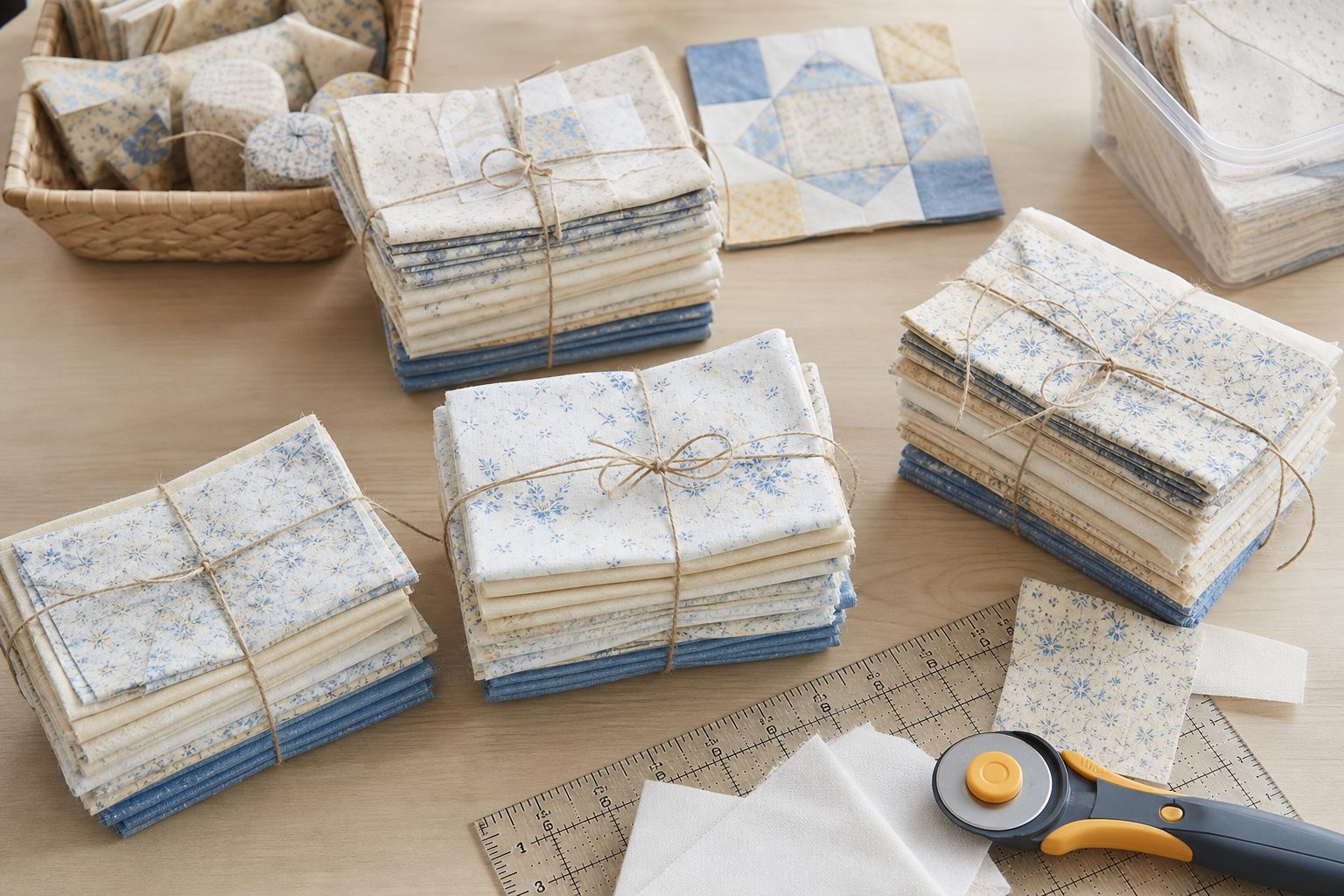
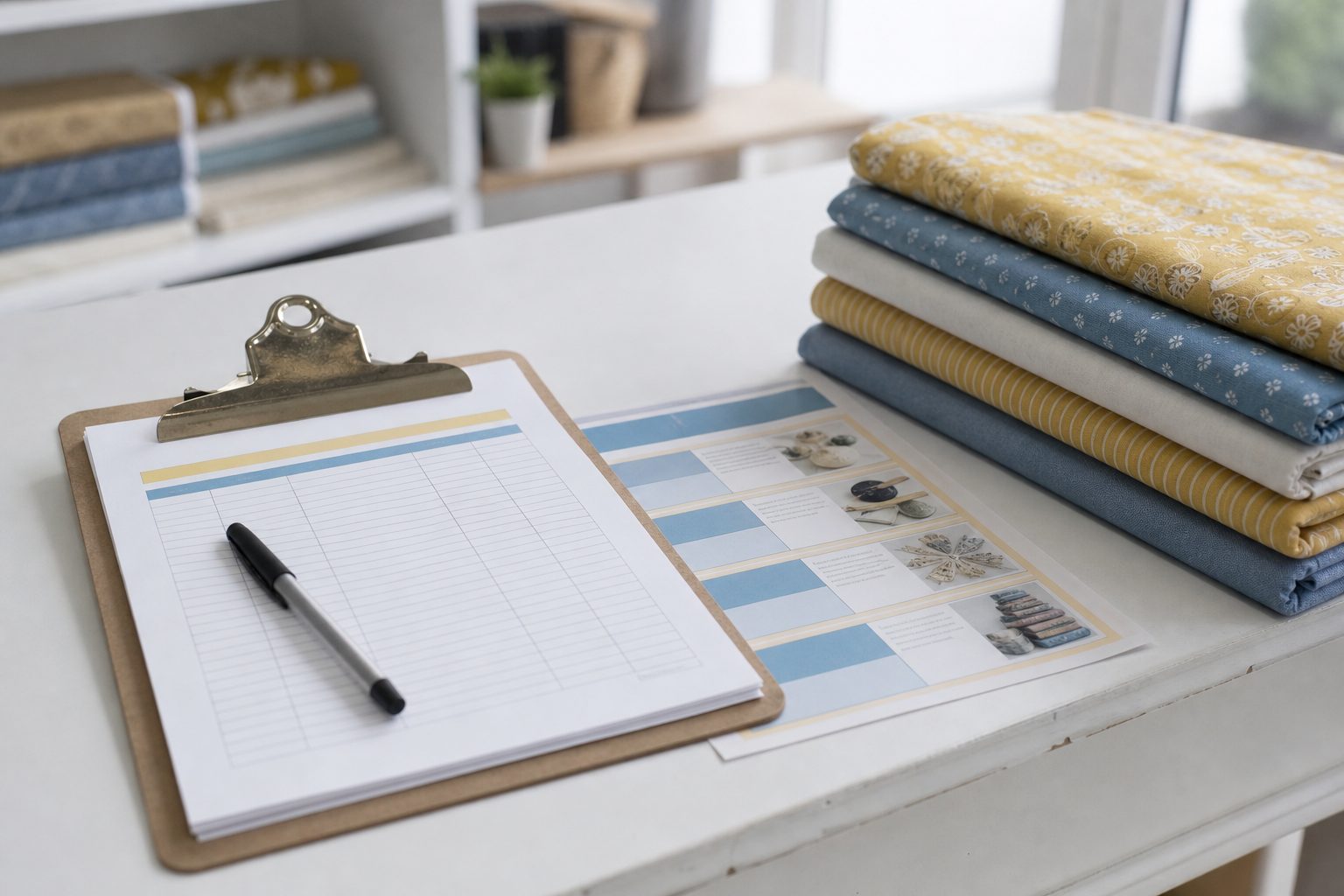
A kit turns a profit when you treat it as a manufactured product with three cost lines, not as a bundle of leftovers with a sticker on it. The three lines are fabric consumed at your landed cost per yard, cutting labor at a real wage, and yield loss, meaning the fabric you pay for but cannot sell because it fell off the end of a bolt in a piece too small for anything.
Miss any one and the margin evaporates. The most common failure is not underpricing the fabric. It is costing the kit against a fat quarter price when the cut actually came off a full bolt, and ignoring the hour and a half a staff member spent at the cutting table.
Here is how to spec, cut and price a kit so the number you wrote on the tag is still true after twelve of them come off the table.
Writing a bill of materials in yards, not in fat quarters
Every kit needs a written bill of materials before a single cut happens. Not the pattern's yardage requirements, which are written for a single quilter buying at retail, but your production spec: for each fabric, the exact cut length in yards or fractions, the bolt it comes from, and the SKU.
Write it in yards because that is how you buy and how your inventory is measured. A pattern that calls for "one fat quarter of five different prints" translates in production to a half yard cut across the width of goods, subcut into two fat quarters. If you cut fat quarters one at a time you will lose the difference between the two halves every time the fold is off.
A workable spec for a twelve kit run of a beginner table runner looks like this.
| Component | Per kit | Run of 12 | Cost per yard | Run cost |
|---|---|---|---|---|
| Focus print | 0.50 yd | 6.00 yd | $6.25 | $37.50 |
| Coordinate A | 0.25 yd | 3.00 yd | $6.25 | $18.75 |
| Coordinate B | 0.25 yd | 3.00 yd | $5.90 | $17.70 |
| Background solid | 0.75 yd | 9.00 yd | $4.80 | $43.20 |
| Binding | 0.375 yd | 4.50 yd | $5.90 | $26.55 |
| Pattern | 1 copy | 12 | $5.50 each | $66.00 |
Fabric subtotal for the run is $143.70, or $11.98 per kit, plus $5.50 for the pattern copy. Those cost per yard figures are your landed wholesale cost including freight, not your shelf price. If you cost a kit at shelf price you have already given away the whole margin to yourself.
Keep reading: What do I owe a customer when a class is canceled or she drops out the night before?
Cutting yield and the fabric you lose to the last piece
Yield loss is the gap between what you consume and what you pay for. It comes from three places, and each one is measurable.
- Straightening the end. Every fresh bolt needs a squaring cut. Call it 2 to 4 inches, roughly 0.08 yards, once per bolt not once per kit.
- The remnant. If a bolt holds 14.5 yards and your run needs 9 yards of background, you are left with 5.5 yards you can still sell. Fine. But if the bolt holds 9.6 yards, you finish with 0.6 yards that will sit in the remnant bin and probably sell at half price or not at all.
- Directional prints and repeats. A large scale print with a 24 inch repeat may need an extra quarter yard per kit to keep the motif placed. Note it in the spec or it will surprise you at the table.
The practical rule: add 5 percent to every cut length in the spec as a cutting allowance, and separately decide what to do with any bolt end under one yard. Charge that remnant to the run at half your cost, since half is roughly what you will recover. On the run above, a 5 percent allowance adds about $7.19, and one 0.7 yard background remnant charged at half cost adds $1.68. Total fabric cost per kit rises from $11.98 to about $12.72.
Costing the labor hour that cuts twelve kits
Time an actual run once and you will never guess again. A twelve kit run of six components means 72 cuts, plus measuring, plus pressing folds, plus bagging.
- Pulling bolts and setting the table: 10 minutes
- Cutting: about 90 seconds per component cut across twelve kits when you stack and cut in a strip, so roughly 40 minutes for six components
- Sorting into twelve sets: 15 minutes
- Folding, bagging, labeling: 3 minutes per kit, 36 minutes
- Entering the run and adjusting bolt yardage: 10 minutes
That is about 111 minutes, call it 1.85 hours. At a fully loaded wage of $19 an hour, meaning $17 plus payroll tax, the run costs $35.15 in labor, or $2.93 per kit. If a staff member is doing this at the cutting counter between customers it will take longer, not less, so do not discount it.
Running kits in batches is the single biggest lever on this line. The same twelve kits cut one at a time as students register can easily take three hours instead of two, because you re-pull the bolts every time.
Keep reading: How did one shop cut its dead bolt inventory in half over a single fiscal year?
Pattern licensing and what a shop is allowed to include
You may not photocopy a pattern into a kit. Copyright covers the written instructions and illustrations, and the practice of including one purchased copy per kit is not a courtesy, it is the requirement. Buy twelve copies wholesale, include one per kit.
Some designers sell an explicit kitting license or a discounted case price for shops that kit their patterns. Some prohibit kitting their pattern with fabric other than the collection it was designed for. Read the terms printed on the back of the pattern, and if it is silent, email the designer and keep the reply. It takes ten minutes and it settles the question permanently.
If the pattern is your own, written in house, the kit cost line drops by the pattern price but you should still cost the printing: color handouts run real money, and a professionally printed pattern reads as worth paying for in a way that a stapled photocopy does not.
Packaging, labeling and substitution when a bolt runs out
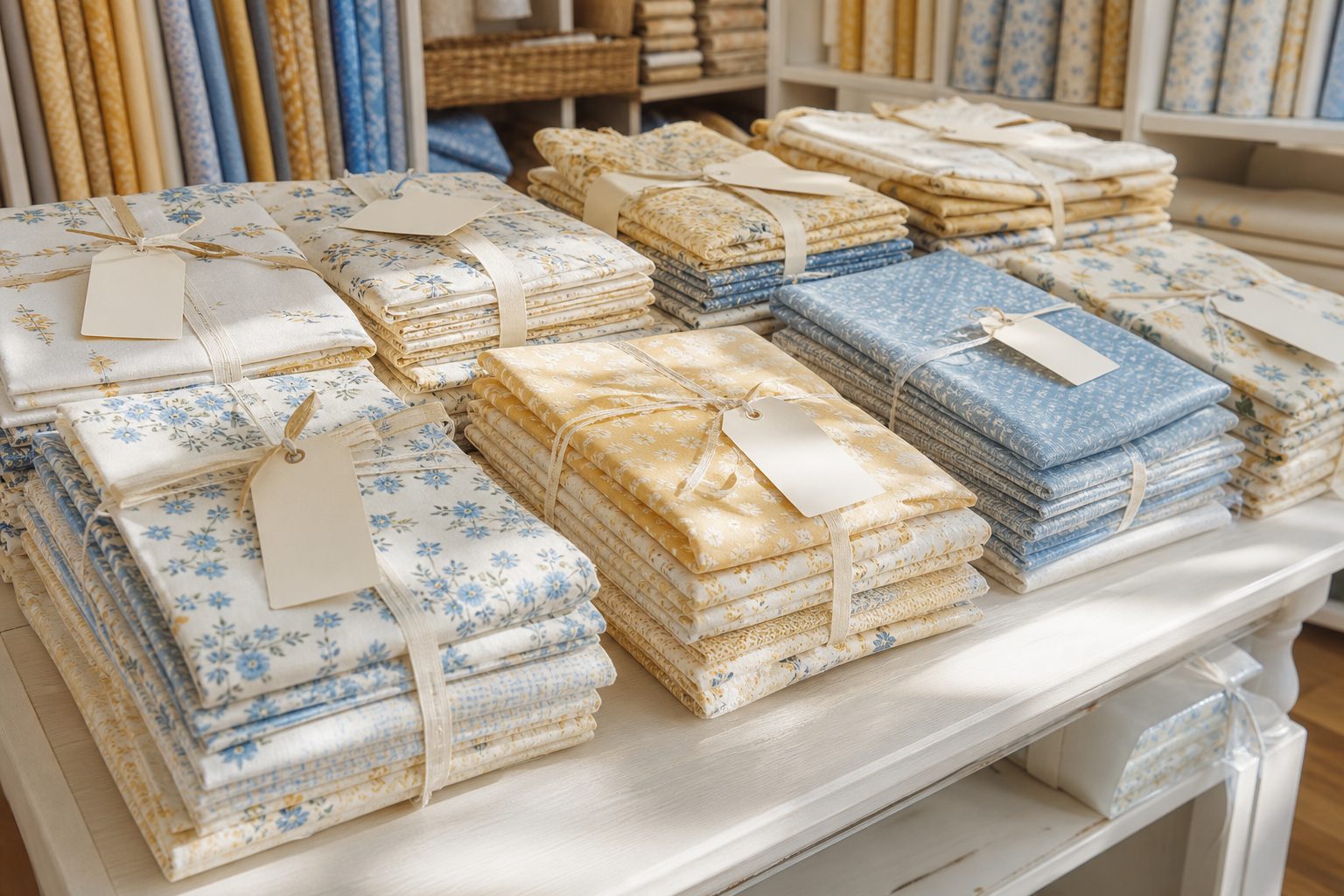
Packaging is a small cost that is easy to leave out. A clear bag, a printed label, and a twine tie run somewhere around $0.60 to $1.10 per kit depending on bag size. Add it to the spec. The label should carry the kit name, the finished size, the pattern name, and a line stating which fabrics are included and which the quilter still needs, usually backing and batting.
Substitution is the harder problem. A bolt runs out mid run more often than anyone expects, especially on the background solid, and reordering a discontinued print is not an option. Set the policy before it happens.
- Substitute within the same collection and the same value, never across value: a light background replaced with a medium changes the quilt.
- Label every substituted kit and say so at pickup. Quilters compare kits in class and will notice.
- If you cannot substitute cleanly, cut fewer kits and open a waitlist rather than shipping a kit you would not buy.
See how QuiltCounter handles this for quilt shops and fabric retail
Pricing against the same fabric sold loose off the bolt
The kit has to be priced against what the customer would pay buying the same yardage at your counter, because she can and will do that math.
Loose, the components above at a $12.50 shelf price for the prints and $10.50 for the solid come to roughly $25.10 in fabric plus $11 for the pattern at retail, about $36.10. She also has to pull five bolts, wait at the cutting table, and hope her choices coordinate.
Now cost the kit. Fabric $12.72, pattern $5.50, labor $2.93, packaging $0.85. Total cost $22.00. Price it at $44 and you have a 50 percent margin, but the customer sees an $8 premium over loose yardage. Price it at $38 and margin is 42 percent while the kit reads as a modest premium for the curation and the time saved. Either can be right. What is not right is $29.99, which after cost leaves $8 for two hours of somebody's day.
The convenience premium is real and defensible. You did the color work and the cutting. Say that on the label rather than apologizing for the price.
Deciding kit quantity from confirmed class registrations
Cut to confirmed and paid registrations plus a small buffer, never to hoped for enrollment. A workable rule for a class capped at ten seats: cut kits equal to paid registrations at the seven day mark, plus two.
The two extras cover a late walk in and a cutting error, and they sell on the shelf afterward as a shop sample driven impulse buy. Cutting ten kits for a class with four registrations is how a shop ends up with six orphaned bundles of last season's collection that nobody wants at full price.
Set a cut date and hold it. If the class fills after you cut, cut a second small run, which costs more per kit in setup but far less than dead stock.
Putting it to work
Take your next class kit and write the six lines: fabric by the yard at landed cost, cutting allowance, pattern, labor from a timed run, packaging, and the remnant charge. Then set price so the margin clears 40 percent. Most shops discover their existing kits sit between 20 and 30 percent, and fixing that is a price change, not a new product.
QuiltCounter holds a kit's bill of materials against the actual bolts, so cutting a run of twelve deducts the yardage from each bolt, warns you when a component will not cover the run, and ties the kit count to the number of paid seats in the class it was built for. Build your next kit spec there and cut to a number you can defend.